Animal Boost
Support their gut through change.
Feed changes. Pasture changes. Young animals develop. Seasons move on. Animal Boost supports the gastrointestinal environment and normal, favourable microflora through the everyday changes of livestock farming.
For calves, cattle and sheep.
BioGro registered • MPI class determined • Made in New Zealand • Independently analytically tested
Farming changes. Their digestive system has to adapt.
Animals don't eat the same feed under the same conditions every day of the year.
A calf moves from milk towards solid feed and pasture.
Cattle move onto different pasture.
Supplementary feed comes into the diet.
Feed quality changes with the season.
A lamb develops into a functioning ruminant.
Mature stock move through changing feed and management throughout the year.
These aren't unusual events.
They're farming.
But every change asks something of the animal's gastrointestinal system and, in ruminants, the complex microbial populations involved in digestion.
That's where Animal Boost fits.
Animal Boost is designed to support gastrointestinal conditions associated with normal, favourable microflora.
A practical livestock supplement that can become part of the way you manage animals through change.
When does Animal Boost fit?
Young stock developing
A young calf isn't simply a smaller cow.
Its digestive system is developing while its diet changes from predominantly milk towards solid feed and pasture.
Animal Boost fits easily into the normal daily calf-rearing routine, providing gastrointestinal support during this important period.
Calves: 5–10 mL daily
Feed changing
A change in feed means a change in what enters the digestive system.
In ruminants, diet also influences the substrates available to the microorganisms responsible for fermentation.
Those microbial populations need to adapt as feeding changes.
Animal Boost is designed to support gastrointestinal conditions associated with normal, favourable microflora through these normal feeding transitions.
Good transition feeding remains important. Animal Boost is designed to work alongside good nutritional management, not replace it.
Pasture changing
Pasture doesn't stay the same through the year.
Its composition, maturity and availability change with season, weather and management.
For grazing livestock, the digestive environment therefore has to deal with a diet that is continually changing.
Animal Boost can be incorporated into the livestock programme as animals move through changing pasture and feeding conditions.
Seasons changing
A farming year is a series of transitions.
Young stock develop.
Feed sources change.
Supplements come in and out.
Pasture moves.
Management changes.
Animal Boost doesn't have to be something that comes out for one short period of the year.
Its gastrointestinal role remains relevant wherever animals are adapting to the normal changes of livestock farming.
Known for calves. Built for livestock.
For many farmers, Animal Boost starts in the calf shed.
We're proud of that.
Calf rearing remains an important Animal Boost use.
But the gastrointestinal environment doesn't stop mattering when the calves leave the shed.
Animal Boost has established directions for young stock, mature dairy and beef cattle, sheep and lambs.
That gives the same product a place at different stages of the livestock cycle — and through more of the farming year.
Calves
Support through early digestive change
The first months of a calf's life involve substantial digestive development.
Milk feeding changes.
Solid-feed intake increases.
The rumen develops.
The calf moves towards pasture and eventually weaning.
Animal Boost can be incorporated simply into the normal daily calf routine.
5–10 mL daily
What does the research tell us?
Independent calf research makes this area particularly interesting.
In a controlled study of 40 pre-weaned dairy calves, oral humate supplementation was associated with changes in measured faecal microflora.
Researchers reported increased abundance of Bifidobacterium and Lactobacillus and decreased abundance of E. coli in supplemented calves.
The study also reported lower faecal scores and lower diarrhoea incidence at some supplementation levels during the early rearing period.
That study used a different humate preparation rather than Animal Boost, so we don't present those results as proven Animal Boost outcomes.
But it provides relevant independent evidence around the relationship between oral humate supplementation and the gastrointestinal environment of young calves.
Dairy cattle
Support the rumen environment through a changing season
A dairy cow's diet doesn't stand still.
Pasture changes through the season.
Supplementary feeds may be introduced or removed.
Weather affects feed and water intake.
Production stage changes.
Inside the cow is a complex rumen microbial system continually interacting with that diet.
Animal Boost provides a practical way to support gastrointestinal conditions associated with normal, favourable microflora as part of normal herd management.
20–40 mL per cow daily
What does the research tell us?
Independent cattle studies have investigated humic substances in relation to:
rumen microbial populations
rumen fermentation
nutrient digestibility
feed utilisation
Researchers have reported measurable changes in several of these areas following supplementation.
Some dairy studies have also reported production differences under their particular experimental conditions.
Because those studies used other humic preparations, we don't turn their results into Animal Boost production promises.
Their value is in helping us understand the relationship between humic substances and the rumen and digestive environment of mature cattle.
Beef cattle
Practical gastrointestinal support for grazing systems
Beef cattle encounter changing pasture, supplementary feed, weather and management throughout the year.
But the way they're managed can be very different from dairy cattle.
Daily individual administration often isn't practical in extensive grazing systems.
Animal Boost has an established weekly direction designed to fit that reality.
40–70 mL per animal weekly
Independent beef-cattle research has directly investigated the rumen environment and found changes in some microbial populations and digestive parameters following humic supplementation.
Sheep & lambs
From the developing lamb to the adult flock
Lambs develop rapidly while their diet and digestive system change.
Adult sheep move through pasture, feed and seasonal changes in systems where daily individual dosing is rarely practical.
Animal Boost has established directions for both.
Lambs: 5–10 mL daily
Adult sheep: 10–20 mL weekly
Newer small-ruminant research has investigated humic substances in relation to gastrointestinal microbial populations, fermentation, faecal measures and digestive parameters.
Not every outcome in those studies changed — which is exactly why we publish the research separately rather than reducing it to a list of marketing claims.
Why the gut?
In ruminants, digestion isn't something the animal does alone.
The rumen contains a complex community of microorganisms involved in fermentation and the breakdown of feed.
Diet influences that environment.
When diet changes, the microbial community has to adapt to what is entering it.
That makes the gastrointestinal environment an important part of livestock management through:
young-stock development
changing feed
changing pasture
supplementary feeding
seasonal transitions
Animal Boost has a deliberately focused role:
Supporting gastrointestinal conditions associated with normal, favourable microflora.
Good nutrition, appropriate feed transitions, clean water, observation and good stockmanship remain the foundation.
Animal Boost is designed to sit alongside those fundamentals.
Why Animal Boost?
Animal Boost has been used in New Zealand farming systems for years.
And when you're giving something orally to livestock, what sits behind the product matters.
MPI class determined
Animal Boost has undergone a class determination with New Zealand's Ministry for Primary Industries and is classified as an:
Oral gastrointestinal-acting microflora-enhancing compound
That classification helps define Animal Boost's intended role.
BioGro registered
Animal Boost is BioGro registered.
For certified organic operations, confirm how individual inputs fit within the requirements of your certification programme.
Made in New Zealand
Animal Boost is formulated and manufactured in New Zealand.
Independently analytically tested
Animal Boost has undergone independent analytical testing through Cawthron Laboratories, including contaminant testing such as heavy metals.
Batch identified and traceable
Every Animal Boost batch carries a batch code with an associated production record.
That means the product supplied can be traced back to its production batch.
What's in Animal Boost?
Animal Boost is a liquid humic and fulvic livestock supplement.
We've deliberately kept the formulation in the background because we think the more useful question is:
Why would I use it with my livestock?
Animal Boost is designed around a defined gastrointestinal role — supporting conditions associated with normal, favourable microflora.
For farmers who want to understand the science in more depth, we've put the independent research in one place.
What does the wider research support?
Humic and fulvic substances and related humate preparations have been investigated internationally in livestock.
Researchers have studied:
gastrointestinal microbial populations
the rumen microbiome
rumen fermentation
digestive parameters
nutrient digestibility and utilisation
animal-performance measures
Some findings are positive.
Some are neutral.
And different studies don't always produce the same result.
That's useful information.
Rather than taking the most impressive result from another product and turning it into an Animal Boost claim, we look at what was actually studied and how closely it relates to Animal Boost's intended gastrointestinal role.
Animal Boost does not currently have its own controlled animal efficacy trials.
The independent research helps us understand the science surrounding the product category. Animal Boost-specific claims remain based on what we can substantiate about Animal Boost itself.
How to use Animal Boost
Animal Boost is intended to fit the farming system rather than create another complicated job.
Current directions
Calves 5–10 mL daily
Dairy cows 20–40 mL daily
Beef cattle 40–70 mL weekly
Lambs 5–10 mL daily
Adult sheep 10–20 mL weekly
Using Animal Boost across a larger herd or flock?
The practical method can depend on animal numbers, access to feed or water, expected water consumption and the way your stock are managed.

Support their gut through change
Animal Boost is a New Zealand-made liquid humic and fulvic livestock supplement designed to support gastrointestinal conditions associated with normal, favourable microflora.
It can be incorporated into livestock-management programmes during everyday changes such as young-stock development, changing pasture, feed transitions and supplementary feeding.
Animal Boost is intended to complement good nutrition, gradual feed transitions, clean water, observation and good stockmanship.
Why Animal Boost?
MPI class determined
BioGro registered
Formulated and manufactured in New Zealand
Independently analytically tested through Cawthron Laboratories
Batch identified and traceable
Suitable for use across different stages of the livestock cycle
Animal Boost has undergone a class determination with New Zealand’s Ministry for Primary Industries and is classified as an:
Oral gastrointestinal-acting microflora-enhancing compound
Animal Boost is not presented as a treatment or prevention for animal disease. Seek veterinary advice where an animal is unwell or where animal-health concerns persist.
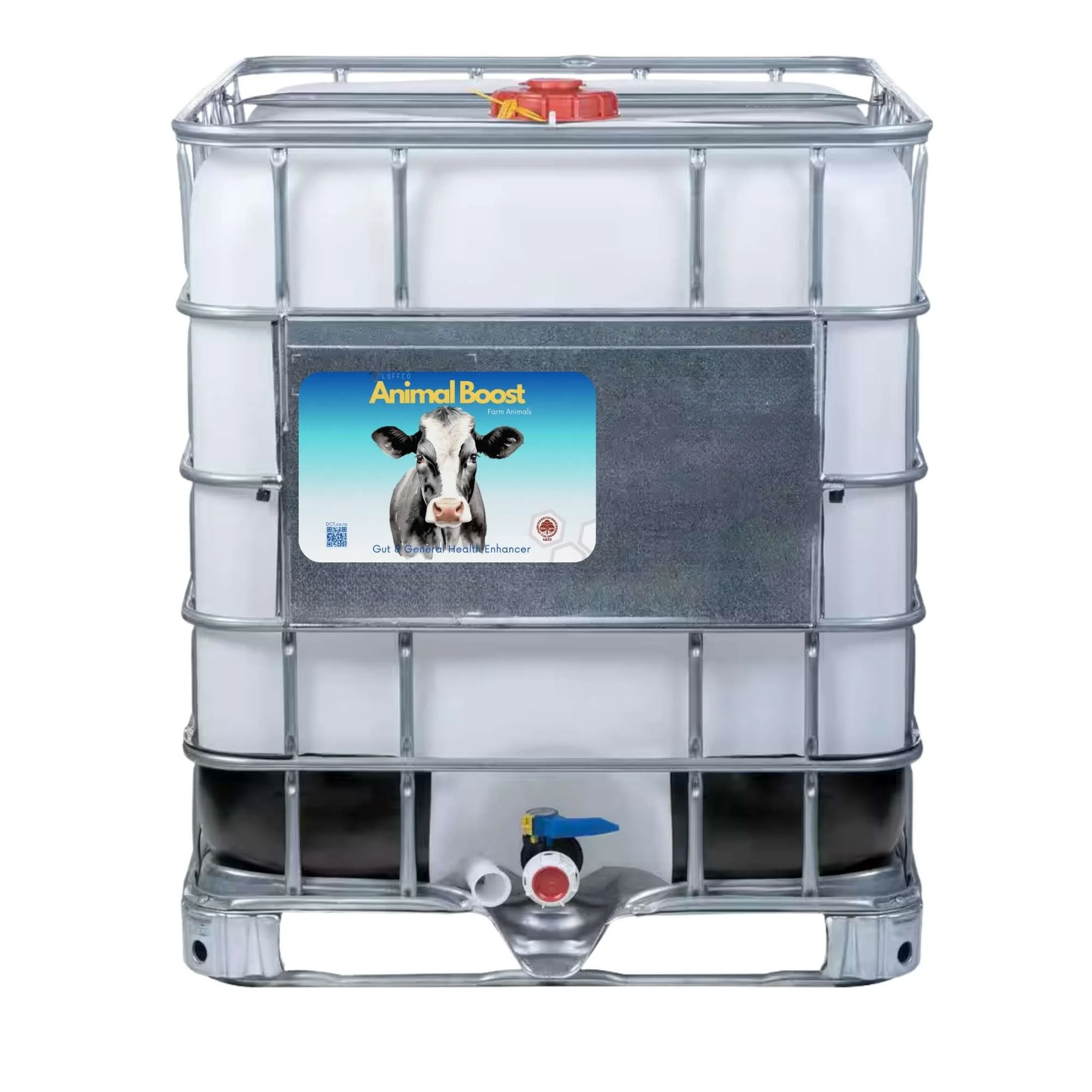
Recommended directions
Calves: 5–10 mL daily
Dairy cows: 20–40 mL per cow daily, or 4 mL per litre of drinking water
Beef cattle: 40–70 mL per animal weekly, or 2 mL per litre of drinking water
Adult sheep: 10–20 mL per animal weekly, or 1 mL per litre of drinking water daily
Lambs: 5–10 mL daily
Horses: 30–40 mL daily
When administering Animal Boost through drinking water, actual intake will depend on water consumption, animal numbers and environmental conditions. Contact DCT for guidance when calculating requirements for a herd or flock.
BioGro registered • MPI class determined • Made in New Zealand • Independently analytically tested
Other established Animal Boost uses
Animal Boost also has established use directions for goats and horses.
These aren't the primary focus of our livestock programme, but current directions are available for customers already using Animal Boost with these animals.
Goats: 1 mL per litre of drinking water
Horses: 30–40 mL daily
Frequently Asked Questions
-
Calf scours can have many causes, but the gastrointestinal environment and its microbial populations are an important part of digestive health in young calves.
In a controlled study of 40 pre-weaned dairy calves, oral humate supplementation was associated with changes in measured faecal microflora.
Researchers reported increased Bifidobacterium and Lactobacillus and decreased E. coli in supplemented calves.
The study also reported lower faecal scores and lower diarrhoea incidence at some supplementation levels during the early rearing period.
The study wasn't conducted using Animal Boost, so we don't present those results as demonstrated Animal Boost outcomes or position Animal Boost as a treatment for calf scours.
-
The microorganisms within the rumen interact closely with the animal's diet.
When the feed changes, the substrates available to those microorganisms change too, and the rumen microbial population has to adapt.
That's one reason gradual feed transitions and good nutritional management are important.
Animal Boost is designed to support gastrointestinal conditions associated with normal, favourable microflora during normal livestock management.
-
Controlled cattle studies have investigated humic supplementation and directly measured rumen microbial populations, fermentation and digestive parameters.
Researchers have reported changes in some of these measures following supplementation, although not every outcome changes in every study.
These studies weren't conducted using Animal Boost, but they help explain the scientific interest in humic substances and the ruminant gastrointestinal environment.
-
Rapid dietary change — particularly involving readily fermentable feeds — can disrupt the rumen environment and is one of the recognised risk factors for acidosis.
Good feed-transition management is therefore important.
Animal Boost's role is different. It is designed to support gastrointestinal conditions associated with normal, favourable microflora.
We don't position Animal Boost as a treatment or prevention for acidosis.
-
Periods of changing supplementary feed are logical times to think about the gastrointestinal environment because the rumen microbial population interacts directly with the diet entering it.
Animal Boost can form part of gastrointestinal support through normal feeding changes.
It should complement good transition feeding and nutritional management.
-
Calf rearing is one of Animal Boost's established uses and remains an important part of the product.
But Animal Boost also has established directions for dairy cattle, beef cattle, sheep and lambs.
That allows its gastrointestinal role to extend beyond the calf shed and into more of the livestock programme.
-
Animal Boost is designed to support gastrointestinal conditions associated with normal, favourable microflora.
Its MPI classification is:
Oral gastrointestinal-acting microflora-enhancing compound.
-
Animal Boost is a liquid humic and fulvic livestock supplement.
-
Yes. Animal Boost is formulated and manufactured in New Zealand.
-
Yes. Animal Boost is BioGro registered.
-
Animal Boost has undergone independent analytical testing through Cawthron Laboratories, including contaminant testing such as heavy metals.
Each batch also carries a batch code with an associated production record.
-
Some independent livestock studies involving humic substances have reported differences in outcomes such as digestibility, growth or milk production.
Other studies have reported little or no significant difference in some performance measures.
Because formulations, animals, diets and study conditions differ — and because these studies weren't conducted using Animal Boost — we don't turn those results into promises of increased milk production or weight gain.
Instead, we keep Animal Boost focused on the gastrointestinal role supported by its classification and use the research to explain the wider science.
Support through change.
Young stock develop.
Feed changes.
Pasture changes.
Seasons change.
The digestive system has to keep adapting to what's in front of the animal.
Good feeding and good stockmanship remain the foundation.
Animal Boost is designed to support the gastrointestinal environment along the way.
Known for calves. Built for livestock.
Read more research behind Animal Boost
Available to order direct or through Farmlands